
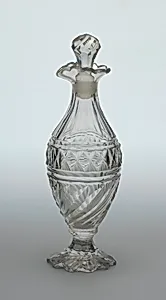
Bottle
ca. 1810
Classification
glasswares
Department
Smithsonian Collection
Museum
Smithsonian American Art Museum
Credit
Bequest of Walter Phelps Warren
Accession Number
1986-61-237-a,b
Rights
Public Domain
About this artwork
Research in Progress
Art Historical Context
This elegant bottle, dating to around 1810, exemplifies 19th-century Americanware from the Smithsonian American Art Museum collection. Crafted during a time when the young United States was embracing industrial innovation, such bottles were essential household items, often produced in regional glasshouses like those in New England or the Mid-Atlantic. Though the artist remains unknown and research is ongoing, its presence in the Smithsonian highlights the everyday artistry of the period, bridging utility and subtle craftsmanship. Glassware from this era typically featured blown-glass techniques, where molten glass was shaped by skilled artisans using molds or freehand methods, reflecting both European influences and emerging American ingenuity. Bequeathed by collector Walter Phelps Warren, this piece joins a treasury of decorative arts that illuminate domestic life in post-Revolutionary America. Visitors might ponder its original use—perhaps for storing spirits, oils, or medicines—offering a tangible glimpse into the textures of history. As curatorial studies continue, this unassuming bottle invites us to appreciate the anonymous makers who shaped America's material culture. (178 words)
About the Artist
Unknown
The artist designated as "Unknown" in our virtual museum's collection exemplifies a poignant chapter in art history: creators whose identities have faded into obscurity despite the enduring power of their work. With only one known artwork attributed to them in our holdings, this figure represents countless anonymous hands that shaped visual culture across centuries. Museums worldwide, including th...