
Bound print
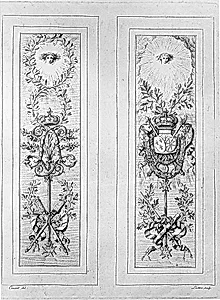
Classification
Bound print
Department
Smithsonian Collection
Museum
Smithsonian American Art Museum
Credit
Purchased for the Museum by the Advisory Council
Accession Number
1921-6-204-72
Rights
Public Domain
About this artwork
Research in Progress
Art Historical Context
Gilles Paul Cauvet (1731–1788), a French engraver and ornamental designer, created this *Bound Print* during the vibrant 18th-century era of decorative arts in France. Active in Paris amid the transition from Rococo exuberance to Neoclassical elegance, Cauvet specialized in intricate engravings that served as pattern books for furniture makers, silversmiths, and. His works, often fantastical motifs like stylized animals and foliage, disseminated sophisticated designs across Europe and beyond, influencing luxury crafts. As a "bound print," this piece likely originates from one of Cauvet's collected volumes, such as his renowned *Recueil d'Animaux* (c. 1770s), where engravings were compiled for practical use by artisans. Though the exact date and medium details await further research—currently in progress at the Smithsonian American Art Museum—this artifact highlights the era's printmaking revolution. Prints like these democratized high design, bridging royal courts and workshops while showcasing Cauvet's mastery of line work and composition. Acquired through the Museum's Advisory Council purchase, it joins the Smithsonian Collection as a testament to transatlantic artistic exchange. Visitors can appreciate how such prints fueled the global spread of French taste, blending utility with artistry in an age of enlightenment innovation.