
Bound print
Classification
Bound print
Department
Smithsonian Collection
Museum
Smithsonian American Art Museum
Credit
Purchased for the Museum by the Advisory Council
Accession Number
1921-6-543-30
Rights
Public Domain
About this artwork
Research in Progress
Art Historical Context
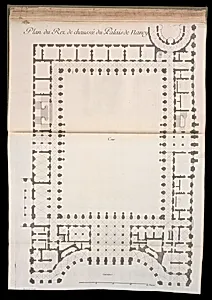
Germain Boffrand (7–1754), a masterful French architect of the Rococo era, this *Bound Print* in 1745, a pivotal year marking the publication of his influential *Livre d'architecture*. a leading figure in Louis XV's court, Boffrand blended ornate elegance with structural innovation, designing lavish interiors at Versailles and the Hôtel de Soubise. This work, classified as a bound print, likely originates from his seminal book, which featured engraved plates disseminating his visionary designs to architects and enthusiasts across Europe. Prints like this were revolutionary in the 18th century, serving as portable blueprints that democratized architectural knowledge during the Enlightenment. Bound into volumes, they preserved intricate details of ornamental motifs, plans, and elevations—hallmarks of Rococo's playful asymmetry and shell-like curves. Though the exact medium remains under study, such engravings captured Boffrand's philosophy of harmony between beauty and utility. Acquired by the Smithsonian American Art Museum through the Advisory Council, this piece invites us to ponder the era's opulent world, where architecture danced on the page. Research continues, promising deeper revelations into Boffrand's enduring legacy.