
Bowl
Unknown Artist
Medium
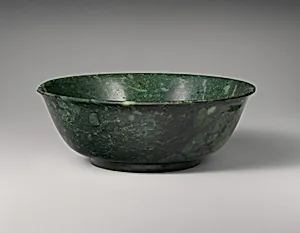
Nephrite, dark seaweed green with mottlings of very light green
Dimensions
H. 2 13/16 in. (7.2 cm); W. 7 15/16 in. (20.2 cm)
Classification
Jade
Culture & Period
China · Ming dynasty (1368–1644)
Department
Asian Art
Museum
Metropolitan Museum of Art, New York, NY
Credit
Gift of Heber R. Bishop, 1902
Accession Number
02.18.413
Rights
Public Domain
Art Historical Context
This elegant jade bowl, carved from nephrite in a striking dark seaweed green mottled with lighter green veins, exemplifies the masterful craftsmanship of China's Ming dynasty (1368–1644). Measuring just 2 13/16 inches high and 7 15/16 inches wide, its shallow, open form invites admiration of the stone's natural beauty, where subtle color variations mimic the patterns of flowing water or lush landscapes—hallmarks of prized jade. In Ming China, nephrite jade held profound cultural significance as a symbol of purity, immortality, and imperial virtue, often reserved for the elite. Artisans employed meticulous techniques like incision and polishing to reveal the stone's translucency and depth, transforming raw material into objects of ritual, display, or daily luxury. Bowls like this one might have graced scholarly tables or ceremonial altars, blending utility with artistry. A gift to the Metropolitan Museum of Art from Heber R. Bishop in 1902, this anonymous treasure from the Asian Art collection offers a window into Ming opulence, where the stone's inherent qualities were celebrated as much as the carver's skill. Visitors, pause to trace its smooth contours and imagine the hands that shaped it centuries ago.