
Bowl
Unknown Artist
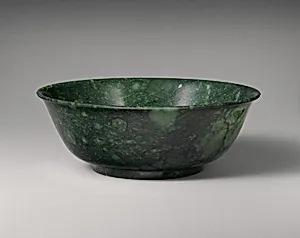
Medium
Nephrite, dark seaweed green with mottlings of very light green
Dimensions
H. 2 13/16 in. (7.2 cm); W. 7 15/16 in. (20.2 cm)
Classification
Jade
Culture & Period
China · Ming dynasty (1368–1644)
Department
Asian Art
Museum
Metropolitan Museum of Art, New York, NY
Credit
Gift of Heber R. Bishop, 1902
Accession Number
02.18.414
Rights
Public Domain
Art Historical Context
This exquisite nephrite jade bowl hails from China's Ming dynasty (136–1644), a age of artistic refinement and imperial splendor. Crafted from dark seaweed greenrite beautifully mottled with very light, it stands just 2 13/16 inches (7.2 cm) high and spans 7 15/16 inches (20.2 cm) wide, embodying the shallow, elegant form typical of elite vessels. Nephrite, prized for its exceptional toughness and subtle luster, was quarried from distant mountains and laboriously carved by master artisans, revealing the stone's natural veining as its crowning glory. In Ming China, jade transcended mere material—it symbolized purity, moral virtue, and harmony with nature, often reserved for ritual objects, scholarly treasures, or the emperor's table. Bowls like this might have held incense, fruits, or ceremonial offerings, their cool, silky surfaces evoking the mythical "jade mountains" of immortality. The unknown artist's restraint in decoration underscores a profound aesthetic: letting the jade's intrinsic beauty shine, a technique perfected during this period's jade renaissance. Today, this timeless piece graces the Metropolitan Museum of Art's Asian Art collection, a generous 1902 gift from Heber R. Bishop. Hold it in your mind's eye and feel the whisper of dynastic elegance.