
Bowl
Unknown Artist
12th–13th century
Medium
Stonepaste; luster-painted on opaque white glaze
Classification
Ceramics
Department
Islamic Art
Museum
Metropolitan Museum of Art, New York, NY
Credit
Rogers Fund, 1912
Accession Number
12.34.1
Rights
Public Domain
Tags
Art Historical Context
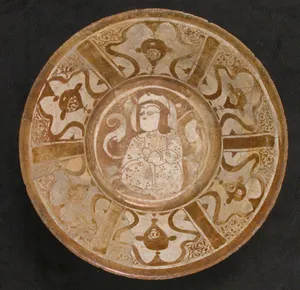
This exquisite stonepaste bowl, crafted by an unknown artist in the12th–13th, exemplifies the pinnacle of Islamic ceramic artistry from the medieval Middle East. Housed in the Metropolitan Museum of Art's Islamic Department (acquired through the Rogers Fund in 2), it features luster-painting on an opaque glaze—a sophisticated technique developed in regions like Syria and Iran during the Seljuk and Ayyubid eras. Stonepaste, a composite body of quartz, clay, and frit, allowed potters to create a fine, porcelain-like surface that was both durable and ideal for intricate decoration. The luster-painting process involved applying metallic oxides over the fired glaze, then refiring in a low-oxygen kiln to produce a shimmering, iridescent gold or coppery glow that catches the light beautifully. This labor-intensive method symbolized luxury and technical mastery, reserved for high-status tableware. Human figures adorn the bowl's interior, a motif common in secular Islamic ceramics, evoking scenes of daily life, courtly revelry, or storytelling—reflecting a rich cultural tradition where artistry blended functionality with narrative delight. As a survivor from over 800 years ago, this bowl offers a window into the vibrant trade networks and artistic innovation of the Islamic world, reminding us how everyday objects could embody profound beauty and skill.