
Bowl
Unknown Artist
13th century
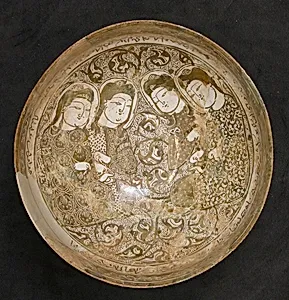
Medium
Stonepaste; glazed and luster-painted
Classification
Ceramics
Department
Islamic Art
Museum
Metropolitan Museum of Art, New York, NY
Credit
H.O. Havemeyer Collection, Gift of Horace Havemeyer, 1948
Accession Number
48.113.21
Rights
Public Domain
Tags
Art Historical Context
This exquisite 13th-century stonepaste bowl, adorned with glaze and luster-painting,ails from the Islamic world, likely the workshops of Iran or Syria during a golden age of ceramic innovation. Stonepaste, a composite of quartz, clay, and frit, created a fine, porcelain-like body that allowed artisans to craft thin, translucent vessels ideal for everyday yet luxurious tableware. The luster technique—applying metallic oxides over the glaze and firing in a low-oxygen kiln—produced shimmering, iridescent gold and crimson hues that caught the light like jewels, symbolizing the technical mastery of Islamic potters who rivaled Chinese porcelain imports. The bowl's decoration, featuring motifs of women, reflects the vibrant secular imagery common in Islamic ceramics of the period. These graceful figures, often depicted in flowing garments amid floral or geometric patterns, graced intimate domestic settings, blending artistry with utility. Such wares were prized by elites, evoking the cultural sophistication of the Abbasid and Seljuk eras amid Mongol influences. Generously gifted to the Metropolitan Museum of Art in 1948 from the H.O. Havemeyer Collection, this bowl invites us to marvel at the enduring allure of medieval Islamic design, where form, function, and fantasy intertwined.