
Bowl
Unknown Artist
12th–13th century
Medium
Stonepaste; overglaze painted, so-called "mina'i" ware
Dimensions
H. 3 3/8 in. (8.6 cm) Diam. 8 in. (20.3 cm)
Classification
Ceramics
Department
Islamic Art
Museum
Metropolitan Museum of Art, New York, NY
Credit
Purchase, Rogers Fund, and Gift of The Schiff Foundation, 1957
Accession Number
57.36.8
Rights
Public Domain
Tags
Art Historical Context
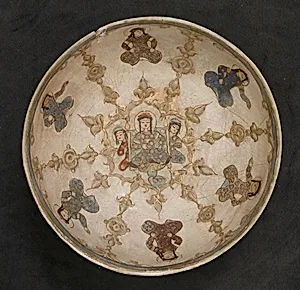
This elegant stonepaste bowl, crafted in the 12th–13th century, exemplifies the pinnacle of Islamic ceramic artistry known as "mina'i". Produced during the Seljuq period in Persia (modern-day Iran), mina'i—meaning "enamel" in Persian— a groundbreaking overglaze painting technique. Artisans first fired a white stonepaste body with a tin glaze, then applied vibrant enamel colors (like cobalt blue, turquoise, and gold) over the glaze. A second low-temperature firing fused these pigments, creating luminous, jewel-like hues that have endured for centuries. Measuring just 3⅜ inches high and 8 inches in diameter, this shallow bowl was likely used for serving fruits, sweets, or beverages in affluent households. What sets this piece apart is its delicate depiction of human figures, a tag highlighting its narrative scenes amid floral motifs and geometric patterns. Such figural representations reflect the era's cultural flourishing, blending courtly life, mythology, and daily scenes with remarkable finesse. Mina'i ware represents a technical marvel and aesthetic peak in Islamic ceramics, bridging pottery and painting traditions before fading with political upheavals. Acquired by The Metropolitan Museum of Art in 1957 through the Rogers Fund and a generous gift, it invites us to marvel at the anonymous artist's mastery and the vibrant world of medieval Islamic luxury.