
Bowl
Unknown Artist
1700–50
Medium
Earthenware; luster-painted on opaque white glaze
Dimensions
H. 4 1/8 in. (10.5 cm) Diam. 15 15/16 in. (40.5 cm)
Classification
Ceramics
Department
Islamic Art
Museum
Metropolitan Museum of Art, New York, NY
Credit
Gift of Dr. and Mrs. Lewis Balamuth, 1968
Accession Number
68.215.6
Rights
Public Domain
Tags
Art Historical Context
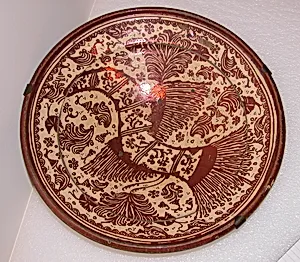
This elegant bowl, crafted by an unknown artist between 0 and 1750, exemplifies the refined ceramics of the Islamic world. Made of earthenware coated in an opaque white glaze—a tin-based technique that created a smooth, porcelain-like surface—it measures a generous 15 15/16 inches in diameter, perfect for communal dining or displaying fruits. Housed in the Metropolitan Museum of Art's Art Department, it was generously gifted by Dr. and Mrs. Lewis Baluth in 1968. The standout feature is its luster-painting, a sophisticated method where metallic oxides were applied over the fired glaze and refired in a reducing atmosphere to produce a shimmering, iridescent gold or coppery glow. This labor-intensive process, perfected in the Islamic tradition from the 9th century onward, symbolized luxury and technical mastery, often reserved for elite patrons. The bowl's broad, shallow form highlights the vibrant decorations, including motifs of birds, which evoke the natural world and paradisiacal themes common in Islamic art, blending utility with poetic beauty. Though the exact origin remains mysterious, this piece reflects the enduring legacy of Islamic potters who influenced global ceramics, from Spain to Persia. Visitors will appreciate its tactile allure and the way light dances across its surface, a testament to artistry that transcends time.