
Bowl
Unknown Artist
1840
Medium
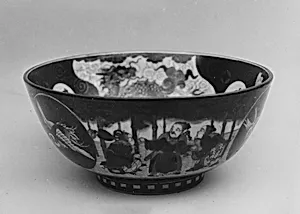
Porcelain decorated in red and gold (Hizen ware, Kutani type)
Dimensions
H. 3 5/8 in. (9.2 cm); Diam. 8 1/2 in. (21.6 cm)
Classification
Ceramics
Culture & Period
Japan · Edo period (1615–1868)
Department
Asian Art
Museum
Metropolitan Museum of Art, New York, NY
Credit
Gift of Mrs. V. Everit Macy, 1923
Accession Number
23.225.199
Rights
Public Domain
Tags
Art Historical Context
This elegant porcelain bowl, crafted around 1840 during Japan's Edo period (1615–8), exemplifies the refined ceramics tradition of Hizen ware in the Kutani style. Produced in the Hizen province (modern-day Saga Prefecture), Hizen porcelain, particularly from Arita kilns, was renowned for its high-quality white bodies and vibrant overglaze enamels. Kutani type brought bold reds and golds to life through meticulous application of mineral-based pigments fired at lower temperatures, creating durable, jewel-like decorations that captured the opulence of late Edo aesthetics. Measuring just 3⅝ inches high and 8½ inches in diameter, this wide, shallow bowl likely served both practical and ceremonial purposes in tea ceremonies or dining rituals. Its surface bursts with dynamic motifs of men and dragons—powerful symbols in Japanese culture. Dragons, embodying imperial strength and water deities, swirl alongside human figures, reflecting folklore and the era's fascination with mythical harmony amid everyday life. A generous gift to the Metropolitan Museum of Art in 1923, this piece highlights the global admiration for Edo ceramics, bridging Japan's isolationist policies with emerging export markets. Visitors can appreciate how such wares blended technical mastery with storytelling, offering a window into a vibrant artistic legacy.