
Bowl
Unknown Artist
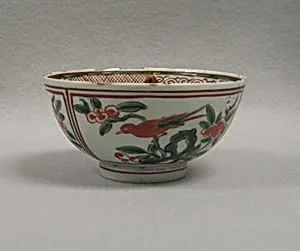
Medium
White porcelain decorated with green enamel and iron red
Dimensions
H. 2 3/8 in. (6 cm); Diam. 4 5/8 in. (11.7 cm)
Classification
Ceramics
Culture & Period
China · Ming dynasty (1368–1644), Xuande period (1426–35)
Department
Asian Art
Museum
Metropolitan Museum of Art, New York, NY
Credit
Rogers Fund, 1925
Accession Number
25.60.8
Rights
Public Domain
Tags
Art Historical Context
This delicate porcelain bowl, crafted during China's Ming dynasty Xuande period (142635), exemplifies the era's mastery of ceramic artistry. Standing just 2⅜ inches tall with a 4⅝-inch diameter, it was fashioned from fine white porcelain—a hallmark of imperial kilns at Jingdezhen—and adorned with vibrant green enamel and iron red overglaze decorations. These subtle motifs of birds amid leaves evoke the natural harmony celebrated in Chinese aesthetics, a sense of lively elegance everyday or ceremonial use. Xuande reign, under Xuanzong, marked a golden age for porcelain innovation, blending underglaze purity with pioneering overglaze enamels. The green enamel, derived from copper oxides, and iron red, fired at lower temperatures to achieve its rich hue, required multiple kiln firings for precision and durability. This technique pushed the boundaries of color vibrancy on porcelain, influencing later dynasties and even global ceramics. Acquired through the Rogers Fund in 1925 and now housed in the Metropolitan Museum of Art's Asian Art Department, this anonymous masterpiece highlights the Ming era's technical brilliance and cultural refinement. Visitors can appreciate how such modest vessels embodied imperial sophistication, bridging artistry and tradition.