
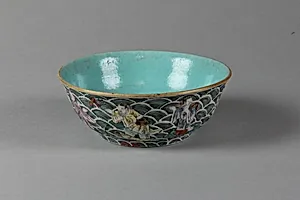
Bowl with Daoist immortals and waves
Unknown Artist
Medium
Porcelain painted in polychrome enamels on the biscuit
Dimensions
H. 1 3/4 in. (4.4 cm); Diam. 4 5/8 in. (11.7 cm)
Classification
Ceramics
Culture & Period
China · Qing dynasty (1644–1911)
Department
Asian Art
Museum
Metropolitan Museum of Art, New York, NY
Credit
Purchase by subscription, 1879
Accession Number
79.2.877
Rights
Public Domain
Tags
Art Historical Context
This delicate porcelain bowl from China's Qing dynasty (1644–1911) showcases the era's mastery of ceramics, standing just 1¾ inches tall and 4⅝ inches in diameter. Titled *Bowl with Daoist Immortals and Waves*, it features vibrant polychrome enamels painted directly onto a biscuit (unglazed) porcelain body. This technique created a matte, absorbent surface ideal for vivid, layered colors that wouldn't run like traditional glazes, allowing intricate details to shine without a glossy sheen. Daoist immortals, or *xian*, are central figures in Chinese Taoism, embodying spiritual transcendence, longevity, and harmony with nature. Depicted here amid swirling waves—likely symbolizing the dynamic forces of the sea or life's eternal flow—these male immortals reflect Qing-era fascination with folklore and philosophy. Such motifs adorned everyday objects, blending the mundane with the mystical to inspire contemplation. Acquired by subscription in 1879, this bowl now graces the Metropolitan Museum of Art's Asian Art collection. It exemplifies Qing porcelain's technical innovation, bridging imperial workshops and popular culture, where even a simple vessel could evoke profound cosmic ideals.