
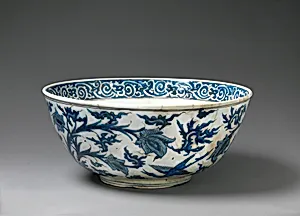
Bowl with Flowering Plants
Unknown Artist
16th–17th century
Medium
Stonepaste; painted in blue under transparent glaze
Dimensions
H. 7 in. (17.8 cm) Diam. 15 3/4 in. (40 cm)
Classification
Ceramics
Department
Islamic Art
Museum
Metropolitan Museum of Art, New York, NY
Credit
Gift of Nasli Heeramaneck, 1964
Accession Number
64.109
Rights
Public Domain
Tags
Art Historical Context
This exquisite *Bowl with Flowering Plants*, crafted by an unknown artist in the th–17th century exemplifies the refined ceramics of the Islamic world. Made from stonepaste—a composite material of quartz, clay, and frit that created a fine, white body ideal for intricate designs—the bowl measures 7 inches high and 15¾ inches in diameter, making it a substantial serving vessel suitable for communal feasts. Its surface is adorned with delicate blue floral motifs painted under a transparent glaze, technique that ensured vibrant, enduring colors while providing a glossy sheen. Flourishing in regions like Persia (modern Iran) during the Safavid era, such ceramics drew inspiration from Chinese blue-and-white porcelain, blending Eastern influences with local ingenuity. The stonepaste body allowed potters to achieve thin walls and precise detailing, while underglaze painting protected designs from wear. Floral patterns, evoking gardens of paradise, held deep cultural resonance in Islamic art, symbolizing abundance, renewal, and divine beauty without relying on human or animal figures. A generous gift to the Metropolitan Museum of Art in 1964, this bowl invites visitors to appreciate the technical mastery and poetic elegance of Islamic artisans, who transformed everyday objects into timeless treasures.