
Imitation Blue-and-White Bowl
Unknown Artist
17th century
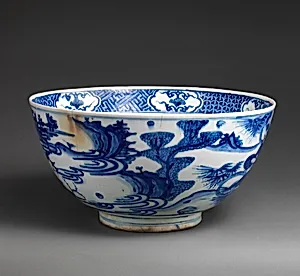
Medium
Stonepaste; painted in blue under transparent glaze
Dimensions
H. 7 1/2 in. (19.1 cm) Diam. 14 1/4 in. (36.2 cm)
Classification
Ceramics
Department
Islamic Art
Museum
Metropolitan Museum of Art, New York, NY
Credit
Bequest of Nellie Kuh, by exchange, Louis V. Bell Fund, and funds from various donors, 1967
Accession Number
67.108
Rights
Public Domain
Art Historical Context
This elegant *Imitation Blue-and-White* from the 17th century exemplifies the ingenuity of Islamic ceramicists in the Department of Islamic Art at the Metropolitan Museum of Art Crafted from stonepaste—a fine, white frit body prized for its porcelain-like translucency—and painted in cobalt blue under a transparent glaze, the bowl measures a generous 14¼ inches (36.2 cm) in diameter and 7½ (19.1 cm) high, ideal for displaying fruits or sweets in grand households. The "imitation" in its title nods to a fascinating cultural exchange: Islamic artisans in regions like Persia, Syria, or the Ottoman Empire masterfully replicated the coveted blue-and-white porcelain of China's Ming dynasty, which was rare and expensive in the West. Using underglaze painting, they achieved vibrant blues that wouldn't fade or run during firing, a technique perfected over centuries in the Islamic world. This bowl's wide, shallow form reflects everyday luxury, blending functionality with artistry. Acquired in 1967 through the Bequest of Nellie Kuh and various funds, it highlights global trade influences and the Met's commitment to preserving these cross-cultural treasures. Visitors will appreciate how such pieces bridged East and West, turning everyday vessels into symbols of sophistication.