
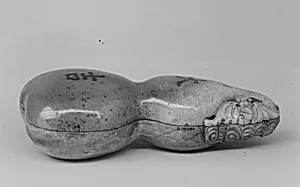
Box with Longevity Symbols
Unknown Artist
18th century
Medium
Jade
Dimensions
H. 2 3/4 in. (7 cm); L. 10 in. (25.4 cm)
Classification
Jade
Culture & Period
China · Qing dynasty (1644–1911)
Department
Asian Art
Museum
Metropolitan Museum of Art, New York, NY
Credit
Bequest of Edmund C. Converse, 1921
Accession Number
21.175.116a, b
Rights
Public Domain
Art Historical Context
This exquisite *Box with Longevity Symbols*, crafted in the 18th during China's Qing dynasty (16441911), exemplifies the era's mastery of jade carving. Measuring just 2¾ inches high and 10 inches long, this compact treasure from the Metropolitan Museum of Art's Asian Art collection was likely used to hold precious items like snuff or cosmetics, reflecting the refined tastes of the imperial elite. Donated through the bequest of Edmund C. Con in 1921, it showcases nephrite jade—prized in Chinese culture for its luminous translucency and associations with purity, virtue, and immortality. Jade's significance in Qing artistry cannot be overstated; it was a material reserved for the most skilled artisans, who meticulously incised intricate motifs symbolizing longevity, such as bats, peaches, or cranes, evoking wishes for eternal life and prosperity. These symbols drew from Daoist and Confucian ideals, blending spiritual auspiciousness with everyday luxury. The box's delicate low-relief carving highlights the technical prowess required to manipulate the hard stone without cracking, a testament to centuries-old lapidary traditions perfected in imperial workshops. For visitors, this piece offers a window into Qing opulence, where art served both aesthetic delight and talismanic purpose—reminding us how ancient Chinese craftsmen wove hopes for longevity into enduring beauty.