
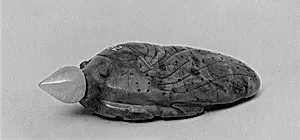
Snuff bottle with stopper
Unknown Artist
Medium
Yellow amber with bright yellow amber stopper
Dimensions
H. 2 1/4 in. (5.7 cm)
Classification
Snuff Bottles
Culture & Period
China · Qing dynasty (1644–1911), Qianlong period (1736–95)
Department
Asian Art
Museum
Metropolitan Museum of Art, New York, NY
Credit
Bequest of Edmund C. Converse, 1921
Accession Number
21.175.205a, b
Rights
Public Domain
Art Historical Context
This exquisite snuff bottle, crafted from lustrous yellow amber with a matching bright yellow stopper, exemplifies the refined artistry of China's Qing dynasty during the Qianlong period (6–95). Standing just 2 1/4 inches (5.7 cm) tall, these pocket-sized vessels were designed to hold powdered tobacco snuff, a luxury imported from Europe in the 17th century quickly became a fashionable habit among the Chinese elite. By the Qianlong era—a golden age of imperial patronage—snuff bottles evolved from utilitarian objects into coveted collectibles, often showcasing masterful carving and rare materials. Amber, fossilized tree resin prized for its warm glow and translucency, was a favored medium for these bottles, allowing artisans to highlight the stone's natural beauty through subtle shaping rather than elaborate decoration. This example's uniform yellow hue evokes sunlight trapped in time, symbolizing prosperity and elegance in Chinese culture. Such bottles were status symbols, carried by scholars and officials, blending functionality with aesthetic sophistication. Now housed in the Metropolitan Museum of Art's Asian Art Department, this piece entered the collection through the 1921 bequest of Edmund C. Converse, preserving a glimpse into 18th-century Qing refinement for modern visitors.