
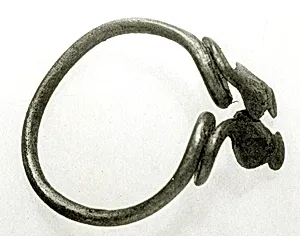
Bracelet
Unknown Artist
304 B.C.–A.D. 364
Medium
Silver
Dimensions
Diam. 4 x H. 2 cm (1 9/16 x 13/16 in.)
Classification
Bracelet
Period
Ptolemaic or Roman Period
Department
Egyptian Art
Museum
Metropolitan Museum of Art, New York, NY
Credit
Purchase, Edward S. Harkness Gift, 1926
Accession Number
26.7.1469
Rights
Public Domain
Art Historical Context
This delicate silver bracelet, dating from 304 B.C. to A.D. 364, hails from Egypt's Ptolemaic or Roman—a time of cultural fusion following Alexander the Great's conquest Crafted by an unknown artist, its modest dimensions (diameter 4 cm, height 2 cm) suggest it adorned the wrist or upper arm, a common accessory for both men and women in ancient Egyptian. Silver, prized for its luster and relative affordability compared to gold, was often used for everyday elite jewelry, symbolizing wealth and protection. The Ptolemaic era (305–30 B.C.) blended Greek Hellenistic influences with enduring Egyptian traditions under the Ptolemaic dynasty, while the subsequent Roman Period brought imperial motifs. Such bracelets highlight masterful metalworking techniques like hammering and soldering, reflecting the era's skilled artisans who drew on millennia-old jewelry-making practices. Worn in life or buried with the dead, pieces like this offered amuletic qualities, invoking gods for safeguarding the wearer. Acquired in 1926 through the Edward S. Harkness Gift and now in the Metropolitan Museum of Art's Egyptian Art Department, this bracelet offers a tangible glimpse into daily luxuries of antiquity, bridging worlds of pharaohs, Ptolemies, and emperors.