
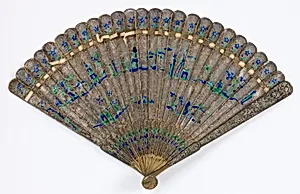
Brisé fan
ca. 1830
Classification
costume & accessories
Department
Smithsonian Collection
Museum
Smithsonian American Art Museum
Credit
Bequest of Miss Elizabeth d'Hauteville Kean
Accession Number
1923-24-1
Rights
Public Domain
About this artwork
Research in Progress
Art Historical Context
Step into the elegant world of 19th-century fashion with the *Brisé fan* (ca. 1830), a delicate accessory from the Smithsonian American Museum's collection of costume and accessories. This fan, bequeathed by Miss Elizabeth d'Haville Kean, exemplifies refined craftsmanship of its era, though its exact medium awaits further research. Brisé fans, named from the French word for "broken," feature articulated ivory or bone sticks that pivot independently, creating a shimmering, lattice-like effect when fanned—a clever design that maximized airflow and visual allure. In the Romantic period around 1830, such fans were essential for women in ballrooms and drawing rooms, serving not just for cooling but as tools for subtle communication: a flick might signal interest, a snap disinterest. They reflected the era's emphasis on femininity, modesty, and social ritual, often adorned with paintings, lace, or pierced motifs that caught the candlelight. Housed in the Smithsonian Collection, this piece highlights everyday artistry in American material culture. Ongoing research promises to uncover more about its origins, inviting us to appreciate how personal objects like this fan wove beauty into the fabric of daily life. (198 words)
About the Artist
Unknown
The artist designated as "Unknown" in our virtual museum's collection exemplifies a poignant chapter in art history: creators whose identities have faded into obscurity despite the enduring power of their work. With only one known artwork attributed to them in our holdings, this figure represents countless anonymous hands that shaped visual culture across centuries. Museums worldwide, including th...