
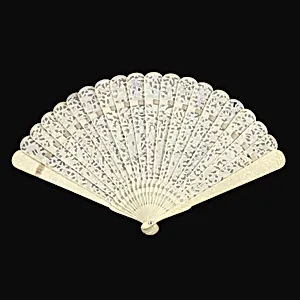
Brisé fan
ca. 1830
Classification
costume & accessories
Department
Smithsonian Collection
Museum
Smithsonian American Art Museum
Credit
Bequest of Mrs. John Innes Kane
Accession Number
1926-37-243
Rights
Public Domain
About this artwork
Research in Progress
Art Historical Context
Step into the elegant world of 19th-century fashion with this exquisite *Brisé fan*, dating to around 1830. Named for the French term "brisée" meaning "broken," this type of fan features articulated sticks—often crafted from ivory, bone, wood—that pivot independently, creating a dynamic, leaf-like spread. As a cherished accessory in the Smithsonian American Museum's Costume & Accessories collection, it the refined craftsmanship of the early Victorian era, when fans were both practical tools for cooling and subtle instruments of social expression. In the 1830s, amid America's growing fascination with European sophistication, women carried such fans to balls, teas, and promenades, using intricate "language of the fan" gestures to flirt, refuse, or beckon discreetly. This piece, bequeathed by Mrs. John Innes Kane, highlights the era's blend of utility and artistry, where every fold concealed delicate decorations like piercings, paintings, or gilding—though ongoing research promises to reveal more about its exact materials and origins. Though the artist remains unknown, the *Brisé fan* invites us to ponder the hidden stories of daily life, preserved as a testament to 19th-century femininity and ingenuity. A delicate survivor of time, it whispers of dances long past.
About the Artist
Unknown
The artist designated as "Unknown" in our virtual museum's collection exemplifies a poignant chapter in art history: creators whose identities have faded into obscurity despite the enduring power of their work. With only one known artwork attributed to them in our holdings, this figure represents countless anonymous hands that shaped visual culture across centuries. Museums worldwide, including th...