
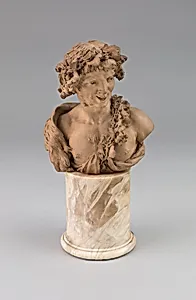
Bust of a Satyr
1770/75
Medium
Terracotta
Dimensions
15.8 × 15.3 × 8 cm (6 3/16 × 6 × 3 1/8 in.); Base: 10.8 × 11.4 cm (4 5/16 × 4 1/2 in.)
Classification
bust/head
Department
Painting and Sculpture of Europe
Museum
Art Institute of Chicago
Accession Number
89236
Rights
Public Domain
Art Historical Context
Clodion, born Claude Michel (17381814), was a master French sculptor renowned for his terracotta figures during the late Rococo period. Created around 1770–75, this *Bust of a Satyr* exemplifies his playful interpretation of classical mythology. Fashioned from terracotta—a versatile, reddish-brown clay favored for its malleability—this small-scale work (just 15.8 × 15.3 × 8 cm) captures the mischievous spirit of a satyr, the half-man, half-goat companion of Dionysus, known for revelry and earthy desires. Terracotta was Clodion's preferred medium for bozzetti, or sculptural sketches, allowing rapid modeling of dynamic forms with textured surfaces that convey movement and texture. The satyr's grinning face, tousled hair, and pointed ears burst with Rococo exuberance, blending sensual vitality with emerging Neoclassical refinement amid France's artistic shifts under Louis XV. Housed in the Art Institute of Chicago's Department of Painting and Sculpture of Europe, this intimate bust invites visitors to appreciate Clodion's genius for animating myth in miniature. It reflects 18th-century fascination with antiquity, offering a window into the era's blend of whimsy and classical revival.