
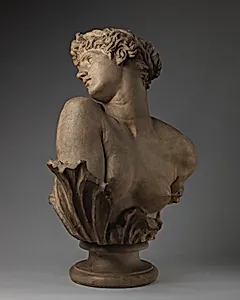
Clytie
ca. 1868–75
Medium
Painted plaster
Dimensions
weight confirmed: 34 in., 60.4 lb. (86.4 cm, 27.4 kg)
Classification
Sculpture
Culture
British, London
Department
European Sculpture and Decorative Arts
Museum
Metropolitan Museum of Art, New York, NY
Credit
Gift of Walter L. Palmer, 1908
Accession Number
08.131
Rights
Public Domain
Tags
Art Historical Context
George Frederic Watts created *lytie* during the height of the Victorian era, a time when British artists often turned to classical mythology for inspiration. The sculpture depicts a female nude, evoking the tragic nymph from ancient Greek legend who was transformed into a sunflower. Cast in painted plaster and measuring 34 inches in height, the work dates to roughly 1868–1875 and reflects Watts’s interest in expressive, allegorical subjects that blend emotional depth with idealized form. Plaster as a medium allowed sculptors like Watts to explore ideas quickly and affordably before committing to more permanent materials such as bronze or marble. Its painted surface adds warmth and lifelike quality, suggesting the piece may have served as a finished model or a rare presentation work. Today housed in the Metropolitan Museum of Art’s European Sculpture and Decorative Arts department, *Clytie* offers visitors a glimpse into the Victorian fascination with myth, beauty, and the human figure.