
Butcher Jim, Ute
1899
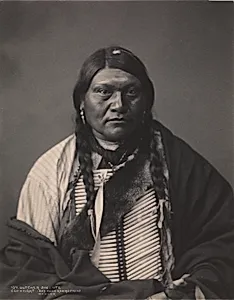
Medium
Photography-Photoprint
Classification
Photography-Photoprint
Department
Smithsonian Collection
Museum
Smithsonian American Art Museum
Credit
Smithsonian American Art Museum, Gift of Charles Isaacs and Carol Nigro
Accession Number
2008.36.1
Rights
Public Domain
Art Historical Context
**Butcher Jim, Ute** (1899) is a compelling photoprint by John K. Rose, capturing the dignified presence of a Ute individual named Butcher Jim. Created at the turn of the 20th century, this photograph exemplifies early documentary photography, a medium that was revolutionizing visual storytelling. Photoprints like this one, typically produced via gelatin silver processes, allowed for detailed, reproducible images that preserved moments with remarkable clarity and intimacy. In the late 19th century, the Ute people—indigenous to regions spanning Colorado, Utah, and beyond—faced profound changes due to U.S. expansion, treaties, and relocation to reservations. Rose's portrait serves as a vital historical record, humanizing Native American lives during this transitional era. Such images were often commissioned or collected for ethnographic study, offering glimpses into cultural identities amid rapid societal shifts. Housed in the Smithsonian American Art Museum through the generous gift of Charles Isaacs and Carol Nigro, this work underscores photography's power to bridge past and present. It invites visitors to reflect on the artistry in portraiture and the enduring stories etched in a single frame.