
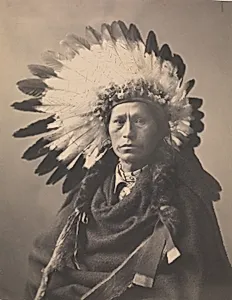
James A. Garfield, Chief of Apaches
1900
Medium
Photography-Photoprint
Classification
Photography-Photoprint
Department
Smithsonian Collection
Museum
Smithsonian American Art Museum
Credit
Smithsonian American Art Museum, Gift of Charles Isaacs and Carol Nigro
Accession Number
2008.36.2
Rights
Public Domain
Tags
Art Historical Context
In the Smithsonian American Art Museum's collection, John K. Rose's 1900 photoprint *James A. Garfield, of Apaches* captures striking portrait of an Apache leader. Created using early 20th-century photographic techniques, likely a silver gelatin print, this medium allowed for detailed, high-contrast images that preserved the subject's dignified presence with remarkable clarity. Rose, a photographer known for documenting Native American life, presents Garfield in a formal pose, emphasizing his status through subtle composition and lighting. The image holds historical significance at the turn of the century, a time when Apache communities navigated profound changes from U.S. expansion and reservation policies. Naming the chief after President James A. Garfield—assassinated in 1881—hints at cultural intersections between Native and Anglo-American worlds, possibly reflecting adoption practices or alliances. Such portraits served as vital records, humanizing Indigenous leaders amid widespread stereotyping. Today, gifted by Charles Isaacs and Carol Nigro, this work underscores photography's role in cultural preservation, offering museum visitors a window into Apache heritage and the artistry of documentary portraiture.