
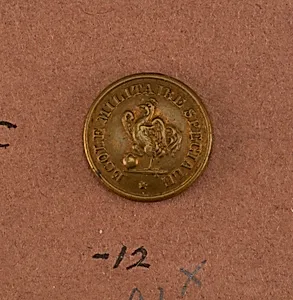
Button
1830–52
Classification
costume & accessories
Department
Smithsonian Collection
Museum
Smithsonian American Art Museum
Credit
Gift of the Misses Hewitt
Accession Number
1931-59-12-a/c
Rights
Public Domain
About this artwork
Research in Progress
Art Historical Context
This unassuming yet evocative button, dating from 1830–52, offers a glimpse into everyday American life during the antebellum era. Produced in the midst of rapid industrialization and expanding fashion trends, such accessories were essential to garments, reflecting both functionality and subtle ornamentation. Classified within the Smithsonian American Art Museum costume and accessories collection, it embodies the material culture of a transformative period marked by Jacksonian democracy, westward expansion, and the early stirrings of the Civil War. Though the artist and medium remain unknown—befitting many small-scale artifacts of the time—this button highlights the craftsmanship of 19th-century dressmakers and manufacturers. Buttons from this era often featured innovative techniques, from molded metal to carved shell or fabric coverings, serving as tiny canvases for personal style amid growing consumerism. Generously donated by the Misses Hewitt, likely the philanthropist sisters Eleanor and Sarah Hewitt known for their textile collections, it underscores the value placed on preserving humble objects that tell broader stories of social history. Research into this piece is ongoing, inviting us to ponder its untold journey—from a dress, coat, or accessory on an American wearer to a museum treasure. Such items remind us how fashion's smallest details weave the fabric of our past.
About the Artist
Unknown
The artist designated as "Unknown" in our virtual museum's collection exemplifies a poignant chapter in art history: creators whose identities have faded into obscurity despite the enduring power of their work. With only one known artwork attributed to them in our holdings, this figure represents countless anonymous hands that shaped visual culture across centuries. Museums worldwide, including th...