
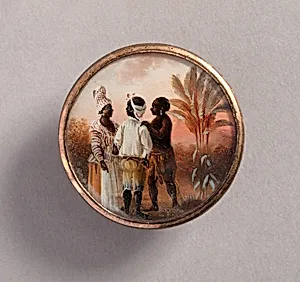
Button
late 18th century
Classification
costume & accessories
Department
Smithsonian Collection
Museum
Smithsonian American Art Museum
Credit
Gift of R. Keith Kane from the Estate of Mrs. Robert B. Noyes
Accession Number
1949-94-15
Rights
Public Domain
About this artwork
Research in Progress
Art Historical Context
Nestled in the Smithsonian American Art Museum's collection costume and accessories, *Button* by Italian artist Agostino Bruniasca. 1730–1796) offers a glimpse into late th-century craftsmanship. Brunias, best known for his vibrant paintings of West Indian life, including portraits of free people of color and plantation scenes, ventured into smaller-scale works like this enigmatic button. Created during a period when he was active in the Caribbean, it reflects the era's blend of European artistry and colonial influences. Buttons in the late 1700s were far more than functional fasteners; they were status symbols adorning luxurious garments, often crafted from metals, fabrics, or enamels with intricate designs. Though the medium of this piece remains unknown amid ongoing research, its classification highlights its role in fashion history, where such accessories showcased personal style and wealth. Brunias's involvement suggests a painterly touch, perhaps elevating a humble object into wearable art. Generously gifted by R. Keith Kane from the Estate of Mrs. Robert B. Noyes, *Button* invites visitors to ponder the intimate details of daily life in a revolutionary age. As research progresses, it promises to reveal more about Brunias's diverse oeuvre and the cultural exchanges of the Atlantic world.