
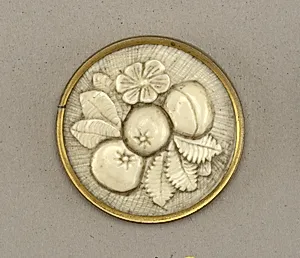
Button
19th century
Medium
costume & accessories
Classification
costume & accessories
Department
Smithsonian Collection
Museum
Smithsonian American Art Museum
Credit
Smithsonian American Art Museum
Accession Number
1931-59-120-c
Rights
Public Domain
About this artwork
Research in Progress
Art Historical Context
Nestled in the Smithsonian American Art Museum's collection of costume and accessories, this unassuming 19th-century button offers a glimpse into everyday artistry from a bygone era. Classified simply as "Button" by an unknown maker, it exemplifies the small-scale objects that once adorned clothing, bridging the worlds of fashion, craftsmanship, and daily life in America. Its presence in the museum highlights how even humble items can hold artistic merit, preserved as part of the nation's cultural heritage. In the 19th century, buttons evolved from functional fasteners to decorative elements, reflecting broader shifts in industrialization and personal style. Often crafted from materials like metal, glass, or fabric—though specifics for this piece await further research—they adorned garments for men, women, and children alike. This button, credited to the Smithsonian American Art Museum, likely contributed to the expressive ensembles of the Victorian age, where such details signaled social status, regional tastes, or emerging mass production techniques. As research continues on this artifact, it invites visitors to appreciate the overlooked beauty in the miniature. What stories of wearers, workshops, or travels does it whisper? A testament to ongoing discovery, it reminds us that art history thrives in the details. (198 words)
About the Artist
Unknown
The artist designated as "Unknown" in our virtual museum's collection exemplifies a poignant chapter in art history: creators whose identities have faded into obscurity despite the enduring power of their work. With only one known artwork attributed to them in our holdings, this figure represents countless anonymous hands that shaped visual culture across centuries. Museums worldwide, including th...