
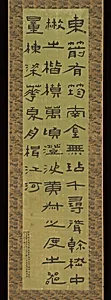
清 陳鴻壽 隸書軸|Calligraphy
Medium
Hanging scroll; ink on green paper
Dimensions
Image: 64 7/8 x 15 in. (164.8 x 38.1 cm) Overall with mounting: 88 1/4 x 21 3/4 in. (224.2 x 55.2 cm) Overall with knobs: 88 1/4 x 26 in. (224.2 x 66 cm)
Classification
Calligraphy
Culture & Period
China · Qing dynasty (1644–1911)
Department
Asian Art
Museum
Metropolitan Museum of Art, New York, NY
Credit
Bequest of John M. Crawford Jr., 1988
Accession Number
1989.363.204
Rights
Public Domain
Tags
Art Historical Context
This exquisite hanging scroll, titled *Lishu Axis* (隸書軸), showcases the masterful clerical script (lishu) of Chen Hongshou, a Ming-Qing artist active during the transition to the Qing dynasty (1644–1911). Chen, celebrated for his innovative figure paintings and archaistic calligraphy, drew inspiration from ancient Han dynasty scripts, evoking a sense of timeless elegance and scholarly refinement. Created in ink on rare green paper, the work measures an impressive 64⅞ × 15 inches, designed for vertical display in elite Chinese interiors during poetic gatherings or festivals. Clerical script, with its bold, flattened strokes and rhythmic flow, originated over 2,000 years ago for imperial edicts and evolved into a revered style for literati expression. Chen's rendition highlights technical virtuosity—varying line weights and structured forms that balance monumentality with fluidity—reflecting Qing-era nostalgia for classical traditions amid dynastic change. The green paper, uncommon for calligraphy, adds a vibrant, jade-like hue that enhances the ink's luminosity, symbolizing harmony with nature in Chinese aesthetics. Housed in the Metropolitan Museum of Art's Asian Art collection through the bequest of John M. Crawford Jr., this scroll invites visitors to appreciate how calligraphy transcends writing to embody cultural identity, philosophical depth, and artistic legacy in imperial China.
About the Artist
Chen Hongshou · 1598–1652
Chinese, 1598–1652