
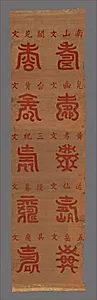
清 緙絲壽字屏條|Panel with Longevity (Shou) Characters
Unknown Artist
19th century
Medium
Silk and metallic thread tapestry (kesi)
Dimensions
78 x 20 3/4 in. (198.12 x 52.70 cm)
Classification
Textiles-Tapestries
Culture & Period
China · Qing dynasty (1644–1911)
Department
Asian Art
Museum
Metropolitan Museum of Art, New York, NY
Credit
Gift of Alice Boney, 1945
Accession Number
45.117.1
Rights
Public Domain
Art Historical Context
This exquisite Qing dynasty kesi tapestry, titled *Panel with Longevity (Shou) Characters*, hails from 19th-century China and stands an impressive 78 inches tall, its slender 20¾-inch width suggesting it formed part of a decorative screen Crafted by an unknown artist, the panel features the auspicious "Shou" (壽) characters—symbols of longevity and eternal life—rendered in silk and shimmering metallic threads. Such motifs were ubiquitous in Chinese art, embodying heartfelt wishes for health, prosperity, and many happy returns, often displayed during celebrations or as imperial gifts. The medium, kesi (slit-tapestry weaving), is a pinnacle of textile artistry, where weavers dissolve silk yarns into fine "pixels" to mimic painting's precision without a ground weave. This labor-intensive technique, prized in Qing court workshops, allowed for intricate details and luminous metallic accents that catch the light, evoking opulence and spiritual harmony. Tapestries like this not only adorned elite homes but also served as talismans, blending artistry with profound cultural reverence for the enduring human spirit. A generous gift to the Metropolitan Museum of Art from Alice Boney in 1945, this panel invites us to marvel at Qing China's masterful fusion of craft and symbolism, a timeless emblem of life's blessings.