
Camera Obscura
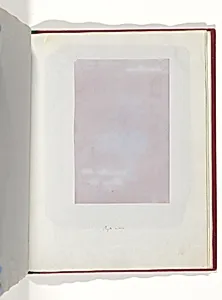
Medium
Salted paper print from paper negative
Dimensions
16.9 x 11.1 cm (6 5/8 x 4 3/8 in.)
Classification
Photographs
Department
Photographs
Museum
Metropolitan Museum of Art, New York, NY
Credit
Harris Brisbane Dick Fund, 1936
Accession Number
36.37 (37)
Rights
Public Domain
Art Historical Context
William Henry Fox Talbot, British inventor and pioneer of, created this salted print in 1840 just as the new was emerging. His experiments helped shift image-making from unique objects, like daguerreotypes, to reproducible works on paper. Titled *Camera Obscura*, the photograph evokes the optical device that had long fascinated artists and scientists, serving as a bridge between traditional drawing aids and the camera. The medium itself is central to the work’s significance. Talbot’s paper-negative process, which he refined into the calotype, allowed light to pass through a negative to create multiple positive prints. The resulting salted paper surface yields soft, matte tones and fine detail, giving early photographs their distinctive warmth and immediacy. Today this small print, acquired by the Metropolitan Museum of Art in 1936, offers visitors a tangible connection to photography’s inventive beginnings. It reminds us how Talbot’s blend of scientific curiosity and artistic vision laid the groundwork for the countless images that shape our visual world.
About the Artist
William Henry Fox Talbot · 1800–1877
William Henry Fox Talbot (1800–1877), a British polymath whose ingenuity transformed visual representation, was born on 11 February 1800 at Melbury House, Dorset, the only child of William Davenport Talbot of Lacock Abbey and Lady Elisabeth Fox Strangways, daughter of the 2nd Earl of Ilchester. His father died shortly after his birth, leaving the family in financial straits until his formidable mo...