
Candlestick
Unknown Artist
first half 14th century
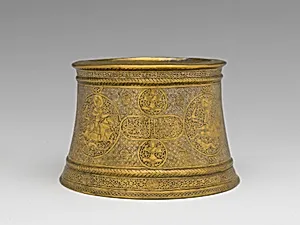
Medium
Brass; engraved and inlaid with silver
Dimensions
H. 10 3/4 in. (27.3 cm) W. 8 3/4 in. (22.2 cm)
Classification
Metal
Department
Islamic Art
Museum
Metropolitan Museum of Art, New York, NY
Credit
Edward C. Moore Collection, Bequest of Edward C. Moore, 1891
Accession Number
91.1.583a, b
Rights
Public Domain
Art Historical Context
This elegant brass candlestick, crafted by an unknown artist in the half of the 14 century, exemplifies the pinnacle of Islamic metalworking artistry. Standing at 10 3/4 inches tall and 8 3/4 inches wide, it hails from the Mamluk period—likely Egypt or Syria— such objects illuminated homes, mosques, and palaces, blending utility with opulent decoration. Now housed in the Metropolitan Museum of Art's Islamic Art department, it the collection through the Edward C. Moore bequest in 1891. The candlestick's surface is masterfully engraved with intricate motifs—typical of Mamluk style, featuring arabesques, geometric patterns, and possibly inscriptions—and inlaid with shimmering silver, a technique known as damascening. This labor-intensive process involved incising designs into the brass and hammering silver wire into the grooves, creating a luminous contrast that catches the light much like flickering candle flames would have centuries ago. Such metalwork demanded exceptional skill, often from specialized workshops patronized by rulers and elites. Beyond its technical brilliance, the piece reflects the cultural flourishing of the Islamic world, where everyday objects became canvases for spiritual and aesthetic expression. Visitors can marvel at how it bridged the practical and the poetic, a testament to enduring craftsmanship.