
Candlestick (one of a pair)
c. 1750
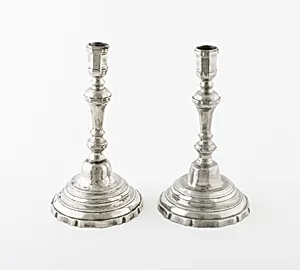
Medium
Pewter
Dimensions
25.4 × 14 cm (10 × 5 1/2 in.)
Classification
candleholder - candlestick
Department
Applied Arts of Europe
Museum
Art Institute of Chicago
Accession Number
89247
Rights
Public Domain
Art Historical Context
This elegant pewter candlestick, one of a matching pair from around 1750, exemplifies the refined craftsmanship of 18th-century European applied arts. Standing at 10 inches tall and 5½ inches wide, its modest dimensions made it ideal for tabletops, mantels, or dining settings, providing essential illumination in an era before widespread electric lighting. Crafted from pewter—an affordable alloy of tin, antimony, and sometimes lead—these candlesticks offered a silvery sheen and durability rivaling pricier silverware, making them accessible to the growing middle class. In the mid-18th century, such objects reflected the Rococo taste for graceful forms and domestic comfort across Europe, blending functionality with subtle ornamentation. Pewter's malleability allowed skilled artisans to create drip pans, sturdy bases, and ergonomic handles, ensuring safe candle use during evening gatherings or intimate meals. Though the maker remains unknown, the piece highlights the anonymous mastery of workshops that supplied households with everyday luxuries. Today, housed in the Art Institute of Chicago's Department of Applied Arts of Europe, this candlestick invites us to appreciate the unsung heroes of material culture—objects that lit lives and warmed homes, bridging utility and artistry in pre-industrial elegance.
About the Artist
Unknown
The artist designated as "Unknown" in our virtual museum's collection exemplifies a poignant chapter in art history: creators whose identities have faded into obscurity despite the enduring power of their work. With only one known artwork attributed to them in our holdings, this figure represents countless anonymous hands that shaped visual culture across centuries. Museums worldwide, including th...