
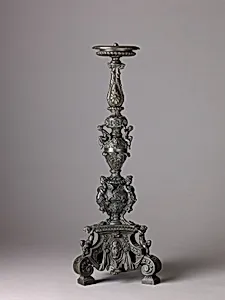
Candlestick Supported by Putti
first half 17th century or later
Medium
Copper alloy, with a black lacquer or wax patina.
Dimensions
H. 57.5 cm (excluding prickets).
Classification
Metalwork
Department
Robert Lehman Collection
Museum
Metropolitan Museum of Art, New York, NY
Credit
Robert Lehman Collection, 1975
Accession Number
1975.1.1381
Rights
Public Domain
Tags
Art Historical Context
In the opulent world of 17th-century Venetian decorative arts, the *Candlestick Supported by Put* stands as a delightful example of collaborative craftsmanship by sculptors Niccolò Rocagliata and Sebastianoini. Crafted in first half of the century or later from copper alloy, this elegant piece rises to 57.5 cm high (excluding prickets and features playful putti—those cherubic infant figures emblematic of Baroque exuberance—hoisting the candlestick aloft with chubby arms and mischievous grins. The black lacquer or wax patina lends an aged, luxurious sheen, mimicking ancient bronzes prized by Renaissance collectors. Roccatagliata, a master of Venetian bronze sculpture, and Nicolini infused the work with the lively dynamism of the Baroque style, where putti symbolized joy, fertility, and divine playfulness, often adorning altars, fountains, and furnishings for the elite. This metalwork masterpiece highlights advanced lost-wax casting techniques, allowing intricate details like the putti's flowing hair and muscular torsos to emerge with lifelike vitality. Functional yet sculptural, it blurred the line between utility and art, reflecting Italy's golden age of ecclesiastical and domestic luxury. Now part of the Robert Lehman Collection at The Metropolitan Museum of Art (acquired 1975), this candlestick invites visitors to appreciate the tactile allure of Renaissance-Baroque metalwork— a testament to Venice's enduring legacy in blending whimsy with technical prowess.