
Candlestick with Figural Imagery
Unknown Artist
first half 14th century
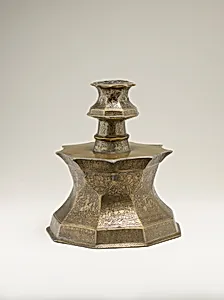
Medium
Brass; cast, engraved, and inlaid with silver and black compound
Dimensions
Max. H. 9 5/16 in. (23.7 cm) Max. W. at base: 8 3/8 in. (21.2 cm) Diam. of bottom: 8 3/8 in. (21.2 cm)
Classification
Metal
Department
Islamic Art
Museum
Metropolitan Museum of Art, New York, NY
Credit
Edward C. Moore Collection, Bequest of Edward C. Moore, 1891
Accession Number
91.1.580
Rights
Public Domain
Tags
Art Historical Context
This elegant brass candlestick, crafted by an unknown artist in the half of the 14 century, exemplifies the pinnacle Islamic metalworking from the Mamluk era in Egypt or Syria. Standing just over 9 inches tall with a sturdy 8⅜-inch base, it served both practical and decorative purposes in elite households or mosques, illuminating spaces while showcasing artistic virtuosity. Its figural imagery—featuring lively depictions of goats and horses—s a bold embrace of animal motifs in Islamic art, possibly symbolizing vitality, pastoral life, or zodiac influences, during a time when such naturalistic scenes flourished amid cultural exchanges along trade routes. The object's medium is a marvel of technique: brass was cast into shape, then finely engraved with intricate details, and inlaid with shimmering silver and a black compound (likely a sulfide) for striking contrast. This labor-intensive process, known as damascening, created a luxurious, jewel-like surface that elevated everyday metalwork to high art. Such pieces were prized status symbols, blending functionality with opulence. Now part of the Metropolitan Museum of Art's Edward C. Moore Collection, this candlestick invites us to appreciate the anonymous craftsperson's skill and the vibrant world of medieval Islamic aesthetics, where utility met profound beauty.