
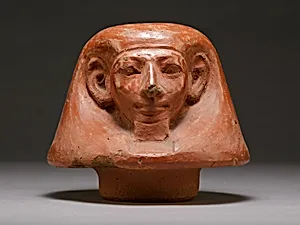
Canopic Jar Lid
Unknown Artist
ca. 1479–1458 B.C.
Medium
Pottery, Nile B, red ochre wask
Dimensions
H. 11.5 cm (4 1/2 in.); W. of wig 14.8 cm (5 13/16 in.); Diam. of rim 5.5 cm (2 3/8 in.)
Classification
lid, canopic, human, Senenmut
Period
New Kingdom
Department
Egyptian Art
Museum
Metropolitan Museum of Art, New York, NY
Credit
Rogers Fund, 1927
Accession Number
27.3.559
Rights
Public Domain
Tags
Art Historical Context
This delicate Canopic jar lid, crafted around 1479–1458 B.C. during Egypt's New Kingdom (Dynasty 18), hails from a golden age of pharaonic power under rulers like Hatshepsut Thutmose III. Standing just 11.5 cm tall with a rim diameter of 5.5 cm, it once topped one of four sacred jars used in mummification rituals to safeguard the deceased's internal organs—lungs, liver, stomach, and intestines—for the afterlife journey. Made from Nile B pottery and coated in a subtle red ochre wash, the lid showcases the era's practical yet refined craftsmanship. The wide wig (spanning 14.8 cm) frames a human-headed figure, likely one of the four sons of Horus—guardian deities whose stylized portraits blended human and divine traits to invoke protection. This modest medium highlights everyday Egyptian artistry, where accessible clay met symbolic precision. On view in the Metropolitan Museum of Art's Egyptian Art department (acquired via the Rogers Fund in 1927), this lid offers a poignant glimpse into ancient beliefs in immortality, reminding us how even small objects carried profound spiritual weight in a civilization obsessed with eternity.