
Capital
Unknown Artist
6th–7th century
Medium
Limestone; carved in relief
Dimensions
H. 11 7/8 in. (30.2 cm) W. 10 1/4 in. (26 cm) D. 10 1/4 in. (26 cm) Wt. 48 lbs. (21.8 kg)
Classification
Sculpture
Department
Islamic Art
Museum
Metropolitan Museum of Art, New York, NY
Credit
Rogers Fund, 1910
Accession Number
10.175.52
Rights
Public Domain
Art Historical Context
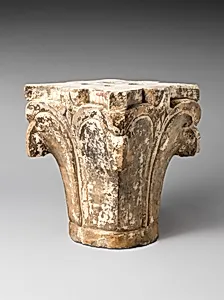
This intricately carved limestone capital, to the 6th–7th century, exemplifies architectural sculpture from the Islamic world. Standing just under 12 inches tall and weighing nearly 50 pounds, it was designed as the crowning element of a column, supporting arches or beams in a grand structure—likely a mosque, palace, or public building. Crafted in low relief, the unknown artist skillfully chiseled motifs that blend late antique traditions with emerging Islamic aesthetics, such as stylized vegetal patterns or geometric forms that evoke abundance and divine order without figurative representation. Housed in the Metropolitan Museum of Art's Department of Islamic Art and acquired through the Rogers Fund in 1910, this capital offers a window into the transitional era when Byzantine, Sasanian, and early Islamic influences converged, particularly in regions like Syria or Egypt. Its modest size belies its cultural weight: such sculptures adorned sacred and civic spaces, symbolizing the era's masterful stoneworking techniques honed over centuries. Visitors can appreciate how the relief's depth and texture catch the light, inviting contemplation of Islam's architectural golden age. (198 words)