
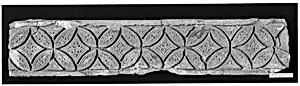
Fragment from a Post or Lintel with Leaves Branching from a Running Vine
Unknown Artist
6th–7th century
Medium
Limestone; carved in relief
Dimensions
H. 7 1/4 (18.4 cm) W. 36 1/8 in. (91.8 cm) D. 3 3/16 in. (8.1 cm)
Classification
Sculpture
Department
Islamic Art
Museum
Metropolitan Museum of Art, New York, NY
Credit
Rogers Fund, 1907
Accession Number
07.228.40
Rights
Public Domain
Art Historical Context
This exquisite limestone fragment, carved in low relief, dates to the 6th–7th century and once adorned a post or lintel in an early Islamic architectural setting. Measuring a modest 7¼ inches high by over 36 inches wide it features a dynamic running from which leaves gracefully branch outward, evoking the lush abundance of nature. vegetal motifs were hallmarks of late antique and early Islamic decoration bridging Byzantine, Sasanian, and emerging Islamic traditions in regions Syria or Mesopotamia. The relief technique—shallow carving that casts subtle shadows and highlights—allowed artisans to create intricate patterns on durable limestone, ideal for doorways, arches, or mosque interiors. This piece exemplifies the anonymity of Islamic workshops, where craftsmanship prioritized harmony and rhythm over individual signatures, symbolizing paradise gardens promised in the Quran. Acquired through the Rogers Fund in 1907, it now graces the Metropolitan Museum of Art's Islamic Art department, offering visitors a tangible link to the dawn of Islamic culture, when ancient motifs blossomed into a new aesthetic era.