
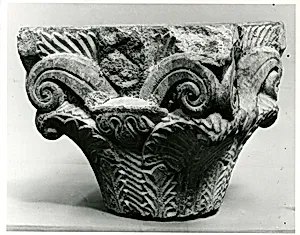
Capital
Unknown Artist
ca. 1130–40
Medium
marble
Dimensions
Overall: 15 3/4 x 14 1/4 x 15 3/4 in. (40 x 36.2 x 40 cm)
Classification
Sculpture-Architectural
Culture
Catalan
Department
The Cloisters
Museum
Metropolitan Museum of Art, New York, NY
Credit
The Cloisters Collection, 1925
Accession Number
25.120.627
Rights
Public Domain
Art Historical Context
This exquisite marble capital, crafted by an unknown artist in Catalonia around 1130–40, exemplifies the architectural sculpture of the Romanesque period. Measuring a compact 15¾ x 14¼ x 15¾ inches, it have crowned a column in a church or monastery, serving both structural and decorative purposes. Carved from marble, a durable medium favored for its luminous quality and ability to capture intricate details, such pieces were integral to the stone-vaulted interiors of medieval buildings. Hailing from Catalonia—a region rich in Romanesque heritage during the 12th century—this capital reflects the era's blend of artistic vigor and religious devotion. Romanesque sculpture often featured bold, stylized motifs like intertwined figures, beasts, or foliage, drawing from Byzantine and Islamic influences while emphasizing narrative depth. Though specific imagery on this capital isn't detailed here, its style contributed to the rhythmic, sculptural ensembles that adorned pilgrimage routes and monastic spaces, symbolizing spiritual order amid the chaos of the Middle Ages. Now part of The Cloisters Collection at The Metropolitan Museum of Art since 1925, this artifact transports visitors to the vibrant workshops of medieval Catalonia. It invites us to imagine the stonemasons' skill under torchlight, chiseling symbols of faith that have endured nearly a millennium. A testament to anonymous mastery, it underscores how everyday architectural elements became profound expressions of culture.