
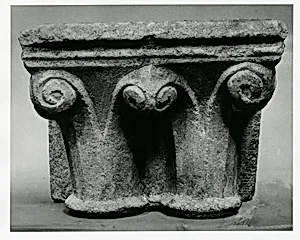
Double Capital
Unknown Artist
late 13th–early 14th century
Medium
Marble
Dimensions
Overall: 20 1/4 x 15 3/4 x 12 in. (51.4 x 40 x 30.5 cm)
Classification
Sculpture-Architectural
Culture
French
Department
The Cloisters
Museum
Metropolitan Museum of Art, New York, NY
Credit
The Cloisters Collection, 1925
Accession Number
25.120.731
Rights
Public Domain
Art Historical Context
Behold the *Double Capital*, a masterful marble sculpture from late 13th- to early 14th-century, now gracing The Cloisters at the Metropolitan Museum of Art. Crafted an unknown artist, this element consists of two intricately carved column capitals, measuring 20¼ × 15¾ × 12 inches. In Gothic cathedrals and abbeys of medieval France, capitals crowned columns, serving both structural and decorative roles—bridging the sturdy shaft below to the arching vaults above while bursting with symbolic foliage and figures. Marble's enduring quality made it ideal for these hand-chiseled masterpieces, where artisans employed precise undercutting techniques to create delicate, naturalistic leaves and tendrils that seem to sway in an unseen breeze. This piece exemplifies the High Gothic style's exuberance, emphasizing height, light, and organic forms inspired by nature, as seen in landmarks like Chartres or Reims Cathedral. Though its exact provenance remains a mystery, it evokes the spiritual grandeur of French ecclesiastical architecture. Acquired for The Cloisters Collection in 1925, this *Double Capital* invites visitors to imagine the divine spaces it once adorned, whispering tales of medieval craftsmanship and faith. A testament to anonymous genius, it reminds us how stone could sculpt eternity.