
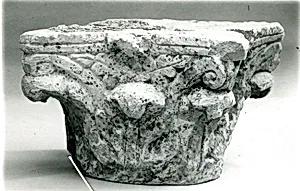
Capital with Leaves
Unknown Artist
6th–7th century
Medium
Limestone; carved in relief
Dimensions
H. 7 7/8 in. (20 cm) W. 12 1/4 in. (31.1 cm) D. 11 3/4 in. (29.8 cm)
Classification
Sculpture
Department
Islamic Art
Museum
Metropolitan Museum of Art, New York, NY
Credit
Rogers Fund, 1910
Accession Number
10.175.45
Rights
Public Domain
Art Historical Context
Behold the *Capital with Leaves*, a limestone sculpture from the 6th–7th, hailing from the early days of Islamic art. Carved in low relief, this architectural element—measuring just under 8 inches tall—once crowned a column, supporting the weight of grand structures like mosques or palaces. Its surface blooms with stylized leaf motifs, rendered with graceful precision, evoking the natural world in a time when vegetal patterns were rising in prominence to adorn sacred spaces without figurative imagery. Crafted from durable limestone, a favored medium in the ancient Near East and North Africa, the piece showcases masterful relief carving techniques. Artisans skillfully incised and modeled the foliage, creating subtle depth and shadow play that would have danced in the filtered light of arched interiors. This artifact reflects the transitional artistry of late antiquity into the Islamic era, where Byzantine and Sasanian influences merged to birth a distinctive aesthetic emphasizing harmony and abstraction. Acquired through the Rogers Fund in 1910 and now housed in the Metropolitan Museum of Art's Islamic Art Department, this capital offers a tangible link to forgotten builders. It whispers of opulent halls where faith and beauty intertwined, inviting us to ponder the hands that shaped stone into eternal springtime.