
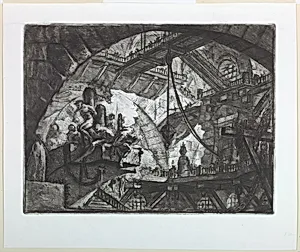
Carceri Series, Plate X
Classification
Department
Smithsonian Collection
Museum
Smithsonian American Art Museum
Credit
Gift of Gertrude W. Lewis
Accession Number
1959-182-9
Rights
Public Domain
About this artwork
Research in Progress
Art Historical Context
Giovanni Battista Piranesi's *Carceri Series, X* (1745) is a print from one of the 18th-century Italian master's most imaginative bodies of work. Born in Venice and later based in Rome, Piranesi a multifaceted artist—architect, engraver, and vedutista (painter of views)—whose dramatic etchings captured the grandeur of ancient Roman ruins while venturing into fantastical realms. This piece belongs to his iconic *Carceri d'Invenzione* (Imaginary Prisons), a series of, labyrinthine architectural fantasies that evoke endless vaults, towering staircases, and shadowy machinery, blending real and invented elements. Created early in Piranesi's career, the *Carceri* prints showcase his virtuoso etching technique, using intricate cross-hatching to build depth, light, and atmosphere in a medium that allowed for precise, monumental scale despite the intimacy of paper. These works transcend simple prison scenes, symbolizing the sublime—humanity's awe and terror before vast, oppressive structures—and prefiguring Romanticism's emphasis on emotion and the irrational. Displayed in the Smithsonian American Art Museum's collection (gift of Gertrude W. Lewis), Plate X invites viewers into Piranesi's visionary mind, where architecture becomes a metaphor for the infinite. Though research continues, the series remains a cornerstone of printmaking history, influencing artists from Goya to Escher with its psychological intensity and technical brilliance.