
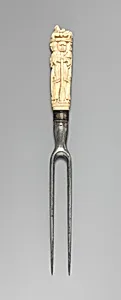
Carving fork
Unknown Artist
last quarter 18th century
Medium
Steel, ivory, silver
Dimensions
Length (fork .91): 10 in. (25.4 cm)
Classification
Metalwork-Steel
Culture
Dutch
Department
European Sculpture and Decorative Arts
Museum
Metropolitan Museum of Art, New York, NY
Credit
Gift of R. Stuyvesant, 1893
Accession Number
93.13.91
Rights
Public Domain
Tags
Art Historical Context
This exquisite carving fork, crafted in the Dutch culture during the last quarter of the 18th century showcases the refined metalwork traditions of the period. Measuring 10 inches (25.4 cm) in length, it combines practical steel tines for slicing meat with luxurious ivory and silver accents, elevating a utilitarian table tool into a decorative object. Delicate motifs of horses and, likely engraved or inlaid, adorn its surface, reflecting themes of elegance and vitality popular in European decorative arts. In late 18th-century Netherlands, such items were prized possessions in prosperous households, symbolizing wealth and sophistication amid the waning influences of the Dutch Golden Age. The use of high-contrast materials—durable steel for function, smooth ivory for grip, and gleaming silver for ornament—demonstrates masterful silversmithing techniques, blending form and artistry. A generous gift from R. Stuyvesant in 1893, this fork now graces the Metropolitan Museum of Art's Department of European Sculpture and Decorative Arts. It invites visitors to appreciate how everyday objects once carried profound cultural prestige.