
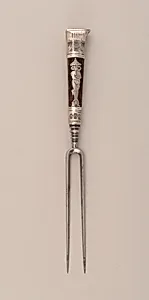
Fork with Silver Handle
1725–1750
Classification
cutlery
Department
Smithsonian Collection
Museum
Smithsonian American Art Museum
Credit
The Robert L. Metzenberg Collection, gift of Eleanor L. Metzenberg
Accession Number
1985-103-19
Rights
Public Domain
About this artwork
Research in Progress
Art Historical Context
### Fork with Silver Handle This elegant *Fork with Silver Handle*, dating from 1725–1750, offers a glimpse into everyday luxury during America's colonial era. Crafted as part of the Smithsonian American Art Museum's cutlery, it exemplifies the refined tableware that graced the homes of the emerging colonial elite. Forks, once a novelty in Europe, were gaining popularity in the American colonies by the mid-18th century, symbolizing sophistication and the adoption of formal dining rituals influenced by British customs. The silver handle highlights the artistry of period silversmithing, a craft prized for its durability, shine, and status. Though the full medium and maker remain under research, such pieces were often produced by skilled local artisans using techniques like casting and chasing to create functional yet decorative objects. This fork reflects broader cultural shifts, as silverware became markers of wealth amid growing transatlantic trade. Generously gifted through The Robert L. Metzenberg Collection by Eleanor L. Metzenberg, it invites us to ponder the intimate stories of colonial life. Ongoing research promises to uncover more about its origins—stay tuned as this humble utensil reveals its place in American history! (178 words)
About the Artist
Unknown
The artist designated as "Unknown" in our virtual museum's collection exemplifies a poignant chapter in art history: creators whose identities have faded into obscurity despite the enduring power of their work. With only one known artwork attributed to them in our holdings, this figure represents countless anonymous hands that shaped visual culture across centuries. Museums worldwide, including th...