
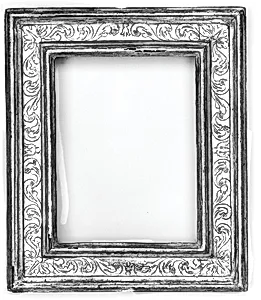
Cassetta frame
Unknown Artist
mid-to-late 18th century, style mid-17th century
Medium
Poplar
Dimensions
Overall: 17 1/8 × 14 9/16 in. (43.5 × 37 cm) Sight: 11 × 8 3/8 in. (28 × 21.2 cm) Rabbet: 11 9/16 × 8 3/4 in. (29.3 × 22.3 cm)
Classification
Frames
Culture
Italian, Bologna
Department
Robert Lehman Collection
Museum
Metropolitan Museum of Art, New York, NY
Credit
Robert Lehman Collection, 1975
Accession Number
1975.1.2518
Rights
Public Domain
Art Historical Context
This elegant *Cassetta frame* from, Italy, exemplifies the renowned tradition of frame-making during the 17th and 18 centuries. Crafted fromlar wood in the mid-to-late 18th century but echoing the robust style of the mid-17th century the frame features the signature "cassetta" design—named for the Italian word for "little box." Its deep rabbet creates recessed, box-like enclosure that frames paintings with architectural depth, mimicking a window into another world and enhancing the illusionistic effects prized in Baroque art. Bolognese frames like this one were essential complements to paintings, often produced by specialized workshops that treated frames as independent artworks. The modest dimensions—overall 17 1/8 × 14 9/16 inches—suggest it once housed a small devotional or cabinet picture, underscoring how such frames elevated domestic art displays. Now part of the Robert Lehman Collection at The Metropolitan Museum of Art (acquired 1975), it highlights the craftsmanship of anonymous Italian artisans and the enduring appeal of these functional yet sculptural objects. Visitors will appreciate how this frame bridges centuries, reviving 17th-century forms amid 18th-century tastes, a testament to Bologna's influence on European framing traditions.