
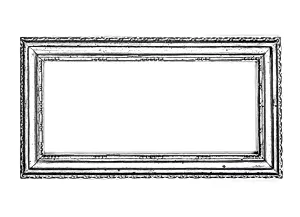
Cassetta frame
Unknown Artist
mid-18th century
Medium
Poplar
Dimensions
Overall: 9 15/16 × 18 1/2 in. (25.2 × 47 cm) Sight: 6 7/16 × 15 1/16 in. (16.4 × 38.2 cm) Rabbet: 7 1/16 × 15 9/16 in. (17.9 × 39.6 cm)
Classification
Frames
Culture
Southern Italy
Department
Robert Lehman Collection
Museum
Metropolitan Museum of Art, New York, NY
Credit
Robert Lehman Collection, 1975
Accession Number
1975.1.2195
Rights
Public Domain
Art Historical Context
Nestled in the Robert Lehman Collection at The Metropolitan Museum of Art, elegant *cassetta* frame hails from Southern Italy in the mid-18th century Crafted from poplar—a lightweight, workable hardwood favored by Italian frame-makers for its affordability and ease in carving intricate profiles—this frame exemplifies the refined carpentry of the period. Its dimensions (overall: 9 15/16 × 18 1/2 in.) are modest, suggesting it once cradled a small portrait, landscape, or devotional painting, with precise "sight" and "rabbet" measurements indicating a snug fit for the artwork within. The *cassetta* style, meaning "little box" in Italian, features a characteristic flat outer frame, raised central molding, and inner contours that create depth and shadow play. Popular from the Renaissance through the Baroque era, these frames were essential in Southern Italian households and churches, elevating paintings while protecting them from dust and damage. Though by an unknown artist, its survival highlights the anonymous mastery of regional woodworkers amid the opulent Rococo tastes of the 1700s, blending functionality with subtle ornamentation. Today, this frame stands alone as a testament to 18th-century decorative arts, reminding us how frames were once artistic partners to paintings, framing not just canvases but cultural narratives. A gift to the Met in 1975, it invites us to appreciate the unsung heroes of art presentation.