
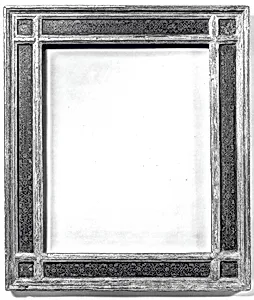
Cassetta frame
Unknown Artist
early 16th century
Medium
Poplar
Dimensions
Overall: 29 3/16 × 24 3/4 in. (74.2 × 62.8 cm) Sight: 21 5/8 × 16 15/16 in. (55 × 43 cm) Rabbet: 22 3/16 × 17 1/2 in. (56.3 × 44.5 cm)
Classification
Frames
Culture
Italian, Siena
Department
Robert Lehman Collection
Museum
Metropolitan Museum of Art, New York, NY
Credit
Robert Lehman Collection, 1975
Accession Number
1975.1.2121
Rights
Public Domain
Art Historical Context
This exquisite cassetta frame, crafted in early 16th-century Siena, Italy, exemplifies the Renaissance artistry of picture framing. Made from poplar wood—a lightweight, workable timber favored by Italian frame-makers—the frame measures 29 3/16 × 24 3/4 inches overall, with a sight opening of 21 5/8 × 16 15/16 inches, perfectly suited to enclose a devotional panel painting or portrait. The cassetta style, meaning "little box" in Italian, a deep, molded profile that creates a recessed, architectural surround, enhancing the illusion of depth for the artwork it holds. Sienese frames like this were integral to the city's vibrant artistic culture, blending Gothic elegance with emerging Renaissance humanism. Often gilded or painted, they transformed paintings into sacred or domestic focal points in palaces and chapels. Housed in the Robert Lehman Collection at The Metropolitan Museum of Art since 1975, this anonymous masterpiece highlights how frames were not mere supports but collaborative art forms, reflecting Siena's golden age of craftsmanship amid regional rivalries with Florence. A testament to enduring elegance, it invites us to appreciate the unsung heroes framing Renaissance beauty.