
Cassone
Unknown Artist
ca. 1500–1525
Medium
Walnut, poplar, wrought iron.
Dimensions
Height: 26 in. (66 cm) Width: 22 13/16 in. (58 cm) Length: 69 5/16 in. (176.1 cm)
Classification
Woodwork-Furniture
Culture
North Italian (Venice)
Department
Robert Lehman Collection
Museum
Metropolitan Museum of Art, New York, NY
Credit
Robert Lehman Collection, 1975
Accession Number
1975.1.1941
Rights
Public Domain
Tags
Art Historical Context
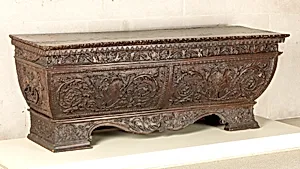
Step into the opulent world of Renaissance Venice with this exquisite *cassone*, a marriage chest dating to around 1500–1525. Crafted by an unknown North Italian artist, these large wooden chests were essential household furnishings, often used to store a bride's trousseau and displayed prominently in homes to symbolize family wealth and alliances. Adorned with motifs of birds and coats of arms—likely carved or painted on its panels—this piece reflects the era's heraldic pride and the vibrant decorative arts of Venice, a hub of trade and luxury. Constructed from fine walnut and poplar woods with wrought iron fittings, the cassone showcases masterful woodworking techniques typical of the period. Walnut provided a rich, durable grain ideal for ornate surfaces, while poplar offered lighter structural support. Its generous dimensions—over 5 feet long—made it both functional and a statement of status, blending utility with artistry in the Renaissance tradition. Housed in the Robert Lehman Collection at The Metropolitan Museum of Art since 1975, this cassone offers a tangible link to Venetian domestic life, where such furniture embodied social rituals and artistic innovation. Imagine it gracing a palazzo bedroom, whispering tales of love, lineage, and legacy.