
Table
Unknown Artist
16th century, second quarter
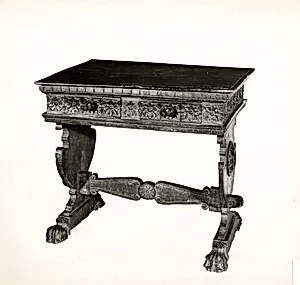
Medium
Walnut, poplar, carved and turned.
Dimensions
H. 82.5 cm, W. 94 cm, D. 71 cm
Classification
Woodwork-Furniture
Culture
Italian, Umbria (Tuscany)
Department
Robert Lehman Collection
Museum
Metropolitan Museum of Art, New York, NY
Credit
Robert Lehman Collection, 1975
Accession Number
1975.1.1966
Rights
Public Domain
Art Historical Context
This elegant table, created in the second quarter of the 16th century in Umbria or Tuscany, Italy, represents the refined craftsmanship of Renaissance furniture making. Standing 82.5 cm high with a width of 94 cm and depth of 71 cm, it was fashioned from walnut and poplar using carving and turning techniques. These woods were prized for their strength and attractive grain, allowing artisans to produce both sturdy and visually appealing pieces suited to the homes of the period’s educated and affluent classes. During the Renaissance, Italian furniture evolved to incorporate classical motifs and balanced proportions inspired by ancient Roman design. The carved and turned elements on this table likely featured subtle decorative patterns that enhanced its functionality as a versatile surface for dining or display. Such objects bridged art and daily life, reflecting broader cultural shifts toward humanism and appreciation for well-crafted domestic goods. Now part of the Robert Lehman Collection at the Metropolitan Museum of Art, the table offers modern visitors an intimate connection to 16th-century Italian interiors. Its preservation highlights the lasting value placed on regional woodworking traditions from this transformative era in European history.