
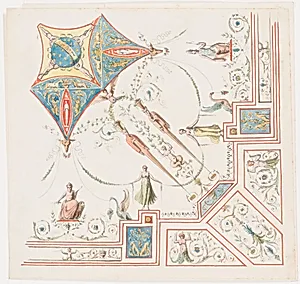
Ceiling in Hadrian's Villa, near Tivoli
Classification
interiors
Department
Smithsonian Collection
Museum
Smithsonian American Art Museum
Credit
Museum purchase through gift of various donors and from Eleanor G. Hewitt Fund
Accession Number
1938-88-4395
Rights
Public Domain
About this artwork
Research in Progress
Art Historical Context
Step into the grandeur of ancient Rome through Luigi Rossini's captivating depiction of a *Ceiling in Hadrian's Villa, near Tivoli (ca. 1820–40). This Italian artist (1790–1857), renowned for his meticulous etchings of Roman antiquities, captures the intricate architectural details of Emperor Hadrian's sprawling 2nd-century villa complex, a UNESCO World Heritage site just outside Rome. Rossini's work reflects the 19th-century fascination with classical ruins, blending Romantic admiration for the past with precise draftsmanship typical of his veduta style—topographical views that preserve fading glories for posterity. As an interior study, the artwork highlights the villa's opulent ceilings, likely adorned with coffers, stucco, and motifs echoing imperial splendor. Hadrian's Villa, built as a retreat for the emperor, showcased innovative Roman engineering and eclectic influences from across the empire, from Egyptian obelisks to Greek statues. Rossini's rendering invites us to ponder how such spaces symbolized power and cultural synthesis. Acquired through museum purchase and the Eleanor G. Hewitt Fund, this piece in the Smithsonian American Art Museum's collection bridges European artistry with American appreciation for global heritage. Though research continues, it reminds visitors of art's power to resurrect history's whispers.