
Charity
ca. 1770–80
Medium
Lead-glazed earthenware
Dimensions
Height: 8 1/8 in. (20.6 cm)
Classification
Ceramics-Pottery
Culture
British, Burslem, Staffordshire
Department
European Sculpture and Decorative Arts
Museum
Metropolitan Museum of Art, New York, NY
Credit
Frederick C. Hewitt Fund, 1911
Accession Number
11.133.3
Rights
Public Domain
Tags
Art Historical Context
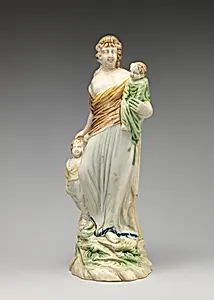
This charming lead-glazed earthenware figure titled *Charity*, created around 1770–80 by Ralph Wood the Younger in Burslem, Staffordshire, embodies one of the three Christian virtues. Standing just over eight inches tall, the sculpture depicts a woman surrounded by children, a traditional motif symbolizing compassion and maternal care. Crafted in the heart of Britain’s pottery region, it reflects the era’s growing interest in accessible decorative arts that conveyed moral messages within the home. Ralph Wood the Younger belonged to a prominent family of Staffordshire potters renowned for their innovative use of lead glazes to achieve vibrant yet soft colors on earthenware. These affordable yet finely modeled figures were popular alternatives to more expensive porcelain, allowing middle-class households to display both artistic taste and virtuous ideals. The Wood workshop’s attention to expressive detail helped elevate such small-scale ceramics from mere ornaments to subtle storytelling objects. Today housed in the Metropolitan Museum of Art’s collection of European sculpture and decorative arts, this piece offers a window into late-eighteenth-century British culture, where art, faith, and everyday life intertwined. Its modest scale and warm palette continue to invite viewers to appreciate the skill and sentiment behind Staffordshire pottery.
About the Artist
Ralph Wood the Younger · 1748–1795
Ralph Wood the Younger was born in Burslem, Staffordshire, in 1748, the son of the celebrated potter Ralph Wood the Elder and a member of a family that stood at the center of the Staffordshire ceramics industry during its most creative and internationally influential period. Growing up in the workshops of his father, he absorbed from childhood the technical traditions of English earthenware produc...