
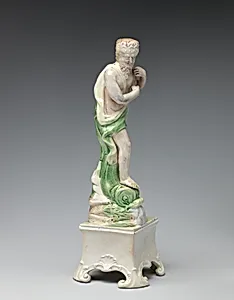
Neptune (one of a pair)
ca. 1770–80
Medium
Lead-glazed earthenware
Dimensions
Height: 11 in. (27.9 cm)
Classification
Ceramics-Pottery
Culture
British, Burslem, Staffordshire
Department
European Sculpture and Decorative Arts
Museum
Metropolitan Museum of Art, New York, NY
Credit
Gift of Mrs. Francis P. Garvan, 1940
Accession Number
40.171.2
Rights
Public Domain
Tags
Art Historical Context
**Neptune (one of a)** *Ralph Wood the Younger, ca. 1770–80* Lead-glazed earthenware Height: 11 in. (27.9 cm) Metropolitan Museum of Art Crafted by Ralph Wood the Younger, a potter from Burslem in Staffordshire, England, this charming lead-glazed earthenware depicts Neptune, the Roman god of sea. Produced around 1770–80 during the peak of the pottery industry, it exemplifies the region's vibrant tradition of affordable, colorful ceramics for middle-class homes. Burslem was a bustling hub of innovation, where potters like Wood specialized in molded figures that brought classical mythology to everyday mantelpieces and cabinets. The medium—earthenware coated with a glossy lead glaze—allowed for bright polychrome finishes and intricate details, such as Neptune's trident, flowing robes, and commanding pose. Standing at 11 inches tall, this piece was likely paired with another figure, creating balanced decorative ensembles popular in Georgian interiors. Wood's neoclassical style reflected the era's fascination with ancient gods, blending whimsy with historical grandeur. Today, housed in the Met's European Sculpture and Decorative Arts collection (gift of Mrs. Francis P. Garvan, 1940), it highlights Staffordshire's role in democratizing art, making mythological splendor accessible beyond elite porcelain. A delightful glimpse into 18th-century British craftsmanship!
About the Artist
Ralph Wood the Younger · 1748–1795
Ralph Wood the Younger was born in Burslem, Staffordshire, in 1748, the son of the celebrated potter Ralph Wood the Elder and a member of a family that stood at the center of the Staffordshire ceramics industry during its most creative and internationally influential period. Growing up in the workshops of his father, he absorbed from childhood the technical traditions of English earthenware produc...